
A lost peyote document from 1619: 5 Questions for philosopher Osiris Sinuhé González Romero
Romero discusses what a recently discovered manuscript reveals about peyote in the 17th century.

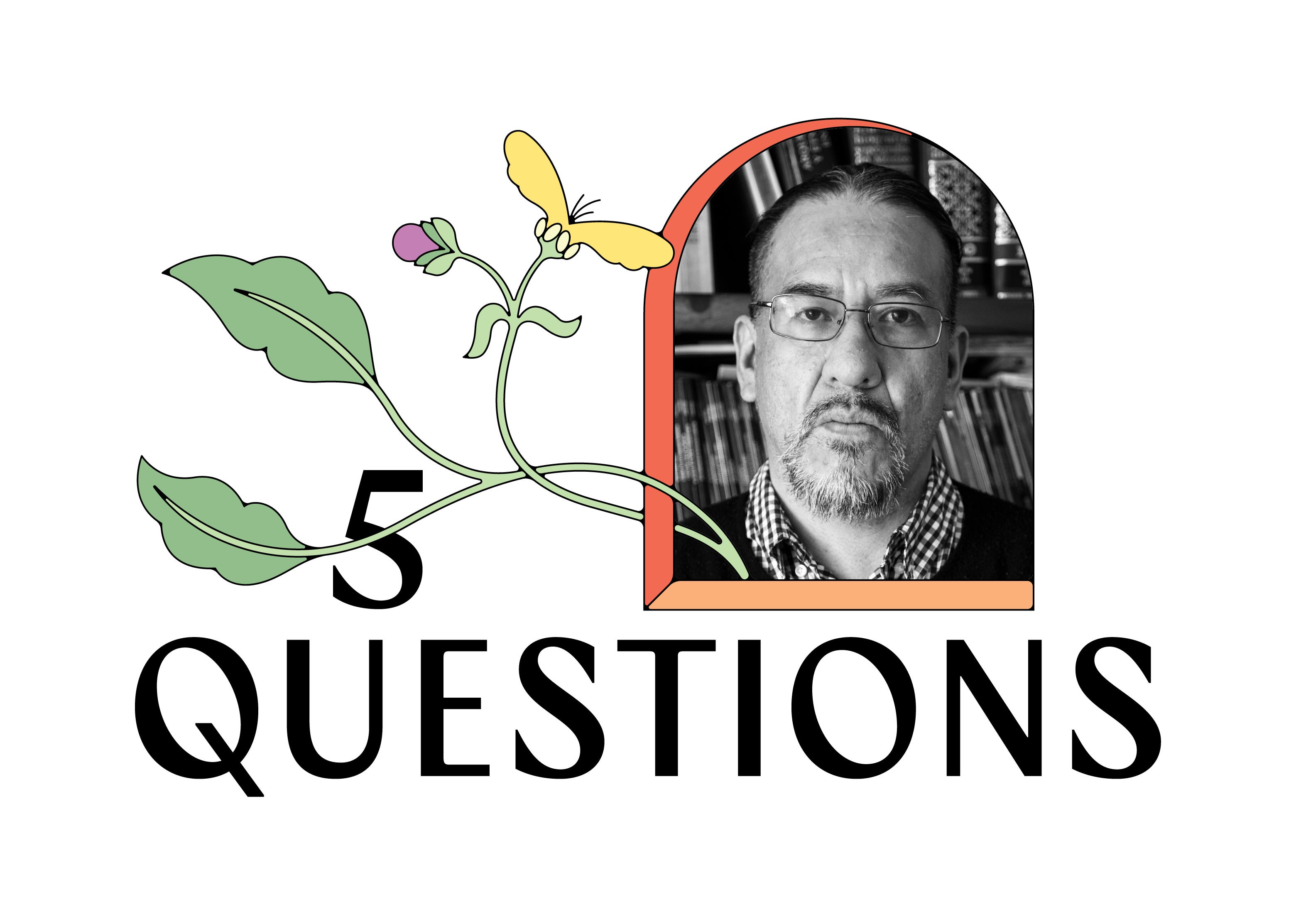
In 2022, a 12-page manuscript with neat script on yellowing paper appeared at an auction in Bogotá, Colombia titled, “Don Juan de Salcedo´s opinion on Peyote: In consultation with Your Excellency, it was confirmed regarding the root of peyote; the effect it causes and its action on those who take and drink it, both Indians and Spaniards and Blacks.” Peyote is a small, spineless cactus native to northern and central modern day Mexico that contains the hallucinogenic compound mescaline.
Dated from 1619, the document was an internal report written by Juan de Salcedo, a rector of the Royal and Pontifical University of Mexico, a school originally founded by Charles I, King of Spain. Salcedo was also a consultant to the Tribunal of the Holy Office, founded by the Catholic Monarchs of Spain to spread and maintain Catholicism in the countries that Spain was colonizing.
The Spanish, led by Hernán Cortés, waged war for years against the Aztec empire in what is now Mexico. In 1521, the Spanish captured and killed the Aztec emperor in the Aztec capital Tenochtitlan. They renamed the territory New Spain, and established the new capital, Mexico City, on the site of Tenochtitlan. The manuscript relays information on how local Indigenous people used peyote in New Spain. The 1619 document appears to be the precursor to a peyote prohibition edict published around a year later, when the church banned peyote internationally—even in places it didn’t grow.
In the manuscript, previously unknown meetings of religious leaders are described. Salcedo mentioned that clergymen were afraid that peyote would prevent religious leaders from converting Indigenous people. For example some ministers warned that “the use of this root was superstitious and served to keep them captive to the devil in manifest violation of our Holy Catholic Faith, and this root manifested impediments to its spiritual use,” Salcedo wrote.
Osiris Sinuhé González Romero, a research fellow at the Center for Advanced Studies Philosophizing in a Global World at Hildesheim University in Germany, saw the manuscript at The University of Madison-Wisconsin, which purchased the text from the auction. Romero has been working to translate it from Spanish, and analyze how the peyote prohibition changed Indigenous and Mestizo behaviors in the region, and how those populations attempted to shield themselves from authorities. He has an academic paper forthcoming on his findings. The Microdose talked to Romero about what the historical document can tell us about what Catholic figures thought about peyote in the 17th century.
When did you first come across this manuscript?
The manuscript appeared in an auction in Bogotá in 2022. The University of Wisconsin in Madison purchased the document through the official channels available.
Regarding this document, the first question is, how does this document appear in Bogotá and not in Mexico? The manuscript bears no readily identifiable stamps or marks of prior ownership—private, or institutional. According to the official information, it was part of a private collection of a Colombian intellectual, a man who loved books and manuscripts.
Now, the manuscript is in the special collections of the Memorial Library. It was on public display for an academic event in the University of Wisconsin-Madison at the end of 2023 during a symposium on psychedelics.
The manuscript was displayed in public, and I was there. I took photographs of the manuscript because it was available for everyone. I come from Mexico, and peyote is part of my research interest.
I started working on the manuscript, and the university collaborated with me. We have started to perform the academic study of the manuscript with paleography, with translation, and with historical study. It’s in Spanish and Latin, and it’s dated April 28 of 1619. It’s a request by the Inquisition to a top scholar called Juan De Salcedo, who was at Pontifical University in Mexico at that time.
What else happened around the time it was written that makes this document important?
One year later, in 1620, the Catholic Church passed an edict for peyote prohibition with an international scope. That included Mexico, Guatemala, Honduras, even the Philippines— territories where the cacti does not grow.
It’s strange, but it’s not that strange, because these were legal jurisdictions of New Spain at that time. But it was the first prohibition policy with an international scope. The manuscript provides valuable historical information regarding how the prohibition policies were developing.
It also includes important information regarding history. For example, in the manuscript, there are some indirect references of the stigmatization of peyote from the first apostolic meeting, [when a group of twelve Franciscan missionaries arrived in New Spain] in 1524.
Does the manuscript offer clues as to why Catholic groups and leaders were against peyote?
The manuscript does shed light on this issue. In the beginning of the first apostolic meeting, [the friars] address different topics regarding customary laws, marriage, cultural features, and so on. It’s interesting to note that peyote has been a topic since the beginning of their evangelical enterprise.
According to the manuscript, the bishops argued that peyote represented an obstacle for the spiritual development of Indigenous people. Before now, the official acts of this first apostolic meeting were lost; we didn’t have the proceedings.
For the Catholic Church the peyote represented a reminiscence of the ancient religious practices, and due to this they decided to create a stigma—to consider it a “diabolical root” and use a colonial framework to describe it, despite the fact that they recognize the therapeutic property. Because peyote resembles ancient religious practices, it was stigmatized and subsequently prohibited.
The peyote banning represented the first attempt to ban globally a plant deeply rooted within Indigenous traditions. Because paradoxically, for some Catholic authorities it represented an obstacle for spiritual development. We can consider this peyote prohibition as a direct antecedent of the current prohibitionist policies


Did Indigenous use of peyote end after prohibition?
It depends on the region. During the 16th and 17th century there were a lot of Inquisition trials on peyote, mainly in central Mexico or in colonial cities. In North Mexico, the evangelizing enterprise was not very homogeneous. The territory was not easy, some places were not easily accessible, and this allowed people to maintain their practices.
It’s interesting to highlight that peyote had a wide circulation, not only in the north— because it grows in the north—but also in central Mexico, among other Indigenous peoples, like the Nahuas, also among the Mestizo population, and even Spaniards and Afro-Mexicans too.
You’ve written that in response to prohibition, some Catholic terminology was incorporated into Indigenous practices. Like, for example, the cactus was associated with the Holy Trinity, instead of the three-part, pre-colonial deity of “maize-deer-peyote.” Under Catholicism people started calling the cactus Baby Jesus and Santa María. And even contemporary Indigenous peoples sometimes call psilocybin mushrooms San Isidro, or refer to Morning Glory as Seeds of the Virgin. Why do you think this occurs?
This is an interesting phenomena, and we can develop two ways of understanding it.
First of all, it is a strategy of survival. Peyote is no exception. It is possible, for example, to find names for peyote such as Santa Rosa, Santa Maria, or even Saint Nicholas. Within the Catholic framework, it is a strategy of survival on the one hand, and on the other hand, it’s an example of spiritual synergy and cultural hybridization.
In some cases, not all, this strategy was successful as it allowed the survival of ancient rituals. Of course, the culture was also evolving, and during history there were different cultural uses of peyote. But thanks to this strategy, it was possible to preserve this past cultural heritage, especially by Indigenous peoples.
This interview has been edited and condensed for clarity and length.
