
Dispatch from The Netherlands
Reporting from the Interdisciplinary Conference on Psychedelic Research

Welcome back to The Microdose, an independent journalism newsletter brought to you by the U.C. Berkeley Center for the Science of Psychedelics.
This Friday, I’m reporting to you from ICPR, the Interdisciplinary Conference on Psychedelic Research, one of Europe’s biggest psychedelics conferences. It takes place in Haarlem, located just 20-minutes on the train from Amsterdam. Haarlem is the oldest city in North Holland; it’s home to the first museum in The Netherlands—a fabulous mix of fossils, scientific instruments, and Dutch art—plus all the canals, cobbled narrow streets, and gabled houses you could want when visiting this part of the world.
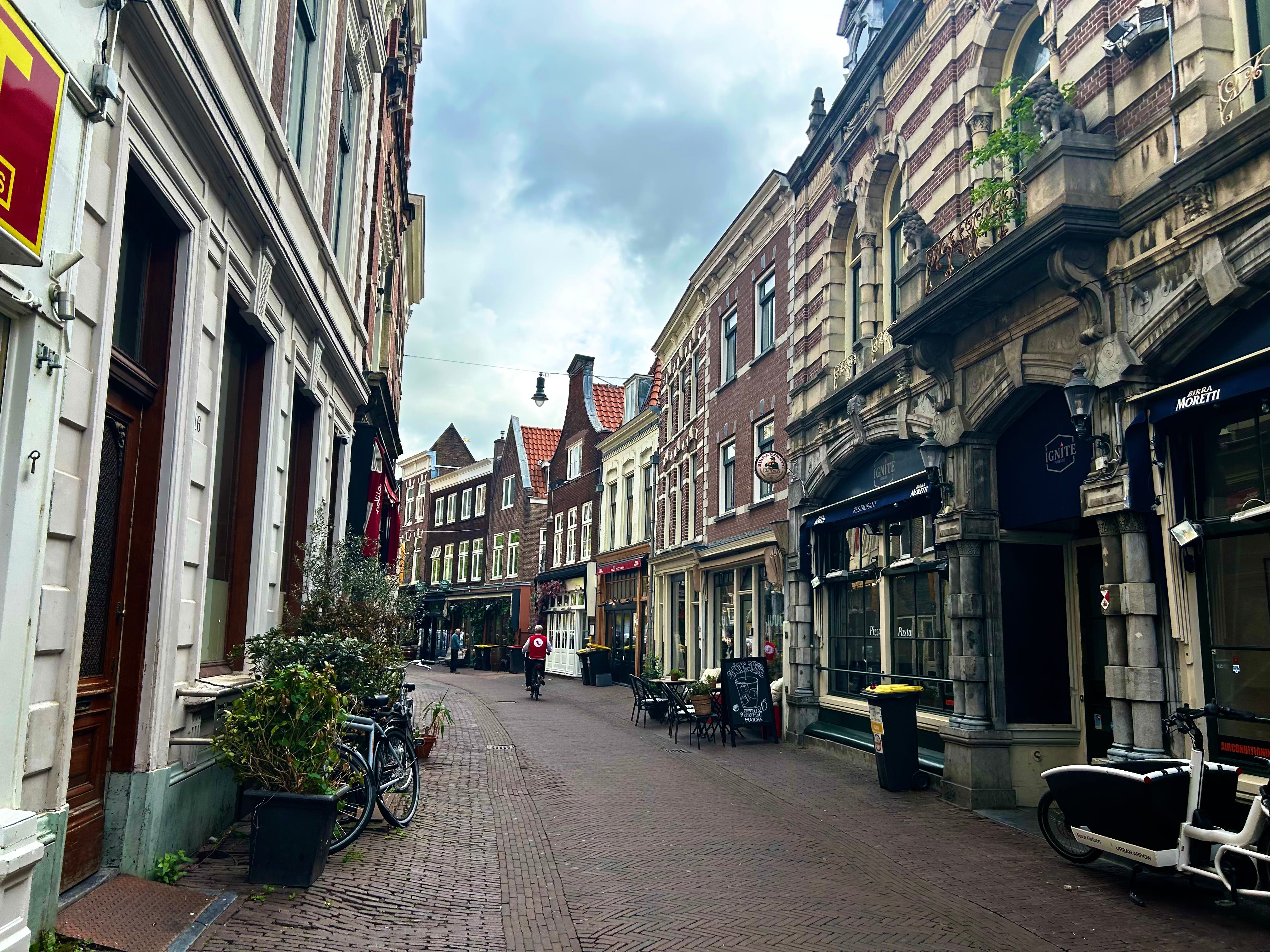
This is the 7th ICPR put on by The OPEN Foundation, a nonprofit that was founded in 2007 to advance psychedelic research and therapy. For the past three iterations, ICPR has been held at the Philharmonie Haarlem, the city’s concert venue. With its brick and wooden interiors, the conference setting feels warmer than those held at a convention center or a university. It also adds to its distinctly European flair. I’m attending ICPR this year in part to suss out how the European psychedelic sphere and European researchers view what is transpiring in the field in the U.S. Before I’d even begun talking to people, I could tell the vibe was different; more dress shirts and slacks and fewer of the giant Amanita muscaria hats and other psychedelia attire that you’d find at MAPS’s Psychedelic Science conferences.
This morning, I reflected on what it’s been like to regularly go to psychedelic conferences in the U.S. over the last seven years, as I have. Initially, some felt so intimate it was like I was intruding on small communities of people who all knew each other. A hype-y period followed, where newcomers from biotechnology, the pharmaceutical industry, and longevity space flooded in, attendance swelled, expectations crested, then fell—and ultimately became confused in the midst of political and regulatory back-and-forth.
“At the risk of generalizing, I think that Europe has approached this field with a certain moderate temperament,” Joost Breeksema, the executive director of the OPEN foundation, said at the opening talk. He acknowledged that this might feel frustrating compared to the spurts of activity taking place in the U.S. But consider how “so much of the discourse is driven by financial pressure, political volatility, opportunism, pharmaceutical companies, deep pockets, celebrities, influencers, tech bros looking for immortality,” Breeksema added. “Our sober outlook looks a little bit more like a sign of maturity.”

Honestly, it is a relief to put the U.S. out of my mind for a few days, even if it’s a case of “the grass is always greener.” President Donald Trump’s executive order on April 18 caused a flurry of debate around whether psychedelics belong to the right or left, if the U.S. is moving too fast or too slow, while reigniting evergreen questions about cost, commercialization, and tensions between regulatory change and medicalization. The executive order “hardly plays a role here,” Breeksema told me. Attending ICPR is a reminder of the European—and global—psychedelic community that is managing its own steady growth and evolution. And they too seem to be grappling with how to make sense of the forward motion of the last several years.
Breeksema offered a metaphor for this sense-making, different from the concept of a “Renaissance” or the hype boom-bust cycle. He compared it to the developmental stages of becoming an adult. “In some ways, I think we’re somewhere in the middle of adolescence,” he said. “The field is growing fast, faster than many of us anticipated, or were even ready for. We are still trying to figure out what kind of adults we will grow to be, what we stand for, what we owe to the people and traditions that were here before us.” And part of embracing maturity is confronting the awkward parts of getting older.
ICPR’s program is wide-ranging, and it doesn’t have a theme. It’s focused more on the humanities than read-outs of clinical trial results. It almost exhaustively considers the experience of different demographic groups and under-addressed experiences. There’s a pervasive critical slant; for example, there are panels on negative results, erotic feelings that emerge in therapy, and the lived experience of psilocybin non-responders.
At the last ICPR I went to, in 2022, I remember the conference also dealing with complex topics. It’s where, for instance, I talked at length to researchers about issues with the limitations of placebo two years before the U.S. Food and Drug Administration listed those reasons in their rejection of MDMA for PTSD. That same year, Johns Hopkins researcher David Yaden created the Wet Blanket award, an honor given to the most “negative” presentation, to encourage psychedelic researchers to share difficult aspects of their work. In 2024, the award was given to Jamila Hokanson from Yale University for presenting on cases where OCD patients did not respond to psychedelic therapy.
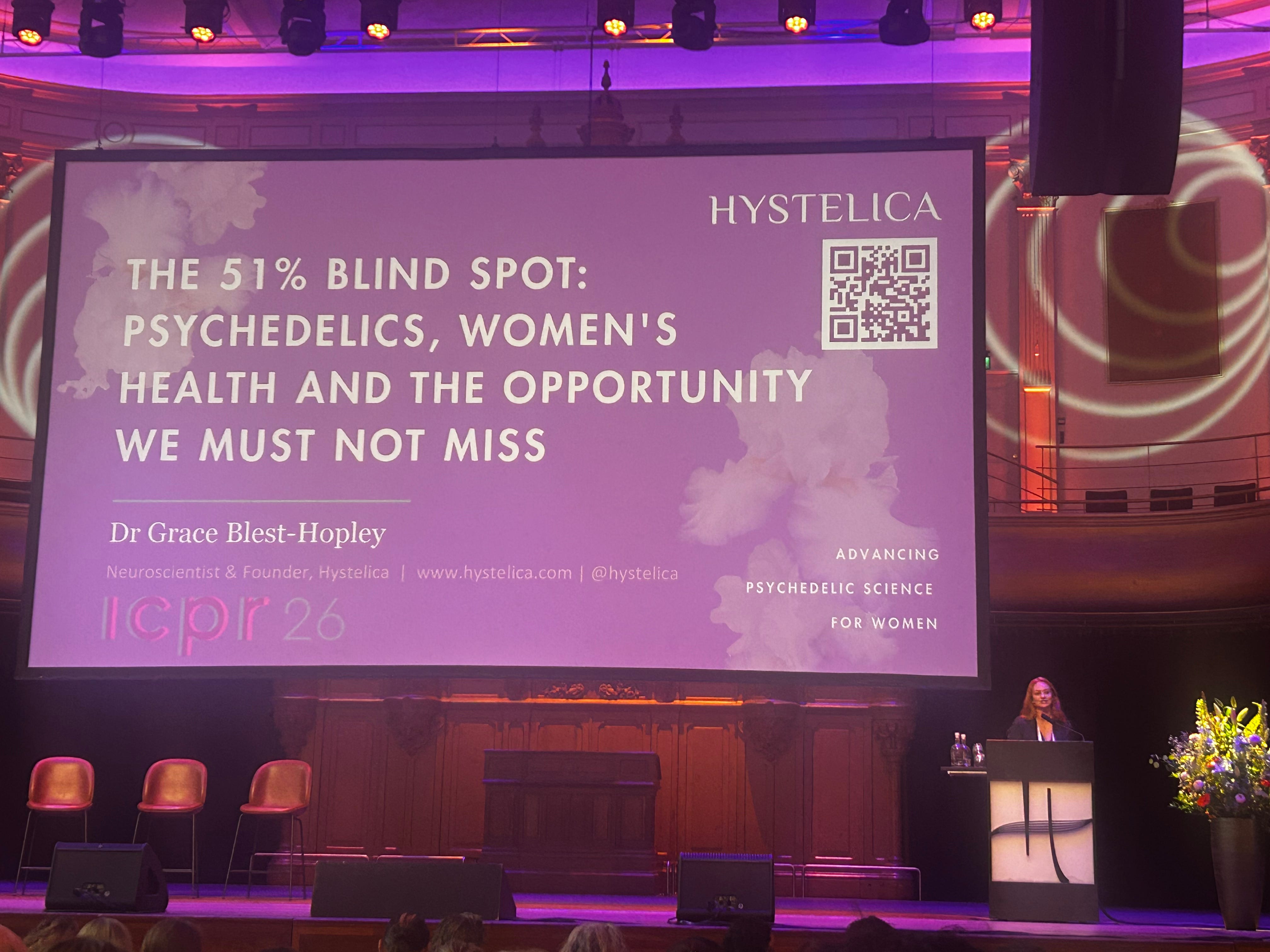
I’m glad to see this ethos still stands—one that takes psychedelics’ potential as a given, and then gets into what emerges after that presumption. In the first talk I saw, a keynote by the neuroscientist Grace Blest-Hopley, whose PhD focused on how cannabinoids affect the brain. She asked why women’s health and biology hasn’t been more of a priority. Even though sex as a biological variable was introduced by the FDA in 2016, very few studies monitor sex-based differences that could emerge based on where a woman is in her menstrual cycle, or what else is going on for her hormonally—let alone the other social and psychological factors that could be unique to women. Estrogen and progesterone fluctuate throughout a woman’s cycle, interacting with the brain and serotonin receptors in meaningful ways, even before you add a psychedelic into the mix. Her non-profit, Hystelica, will be doing research in collaboration with King’s College London on psychedelics and menopause.
Continuing on the motif of narrowing in on specific groups, I heard intriguing presentations on two small research projects, one that revealed psychedelic use among Orthodox Jews, the other among Muslim women. It was fascinating to hear how the Jewish men made psychedelics “kosher,” by making changes to ceremonies that aligned with their views. In some cases, they had encounters with Jewish entities, whereas a Muslim woman interviewed, said she found her connection to the Quran deepened.
There is a very strong therapy theme I’ve picked up on here, which struck me as notable given the trend in the U.S. among companies looking to bring psychedelic drugs to market is to move away from psychotherapy and towards the more nebulous “psychological support.” I heard Dutch psychotherapist Guy Simon speak about cases when therapy doesn’t help those with extended difficulties after taking psychedelics. An interesting talk from Dutch psychiatrist Damiaan Denys asked whether psychedelics should affirm, without question, or move beyond the diagnostic categories in the Diagnostic and Statistical Manual of Mental Disorders, or DSM, published by the American Psychiatric Association. And I spotted panels on a Foucauldian analysis of “losing your mind,” how Jungian therapy might shape psychedelic therapy, and culturally adapting therapy for Indian and Rwandan patients. Breeksema told me that the program is largely driven by what would-be presenters submit; it’s like a snapshot of what researchers are thinking about at the moment. But he has a penchant for big-picture perspectives that drive the curation.
For the rest of Friday and into the weekend, I am looking forward to a symposium on Asian psychedelia, which is something I’ve long been curious about—how cultural norms might interact with psychedelics. In anthropologist David Dupuis’ talk on Ayahuasca-induced voices, he’ll explore why auditory hallucinations are less considered than visual ones. And there’s a very striking interview that will take place with Garik Rober, a German physician and psychotherapist. In 2009, Rober led an illegal psychedelic group therapy, and two people died. He was sentenced to four years in prison for negligent homicide plus a lifetime ban on being a therapist. “Our conditions for giving this a stage were that we would neither try to absolve him or justify him, or neither try to condemn him,” Breeksema said. “Instead, honestly, exploring what could lead to such a situation, what we can learn from it, how we can prevent it from happening in other such situations.”
Finally, three big names in consciousness research—Bernardo Kastrup, Anil Seth, and Christof Koch—will debate whether psychedelics teach us anything about the nature of consciousness or reality. I love when experts in other fields highly related to psychedelics (like consciousness or neuroscience) come to psychedelic conferences and share their wisdom.
The array of perspectives, in some ways, is overwhelming. The conference is trying to acknowledge ethical breaches and the ongoing wars in the Middle East and Ukraine, as well as give voices to clinical trial patients, honor Indigenous lineages, shine light on women’s health, nod to the recreational psychonaut, and make space for various religious belief systems all at once. It’s a staunch reminder that psychedelics mean very different things to different people—and we should try to contend with all of them. How do I feel about the ability to do so? As I overheard one attendee say to another over coffee in the main lobby: “neither too optimistic nor too pessimistic.”

I’ll be back on Monday to give you a recap of what else I found at the conference!