
Dispatch from The Netherlands Part 2
Reporting from the Interdisciplinary Conference on Psychedelic Research

Welcome back to The Microdose, an independent journalism newsletter brought to you by the U.C. Berkeley Center for the Science of Psychedelics.
After three packed days, my brain is buzzing from everything I’ve seen and heard here in Haarlem, at ICPR, one of Europe’s biggest psychedelics conferences. The program certainly lived up to the promise of being “interdisciplinary.” As I mentioned in my first dispatch, the conference didn’t shy away from difficult topics, while also highlighting psychedelic research from many fields. In practice, however, it’s not always easy to be critical, and at some points I got the sense that Joost Breeksema, the executive director of the OPEN foundation, was right when he determined that the psychedelic field is in its awkward teen years. Here are some takeaways and interesting tidbits I gleaned from a few different talks.
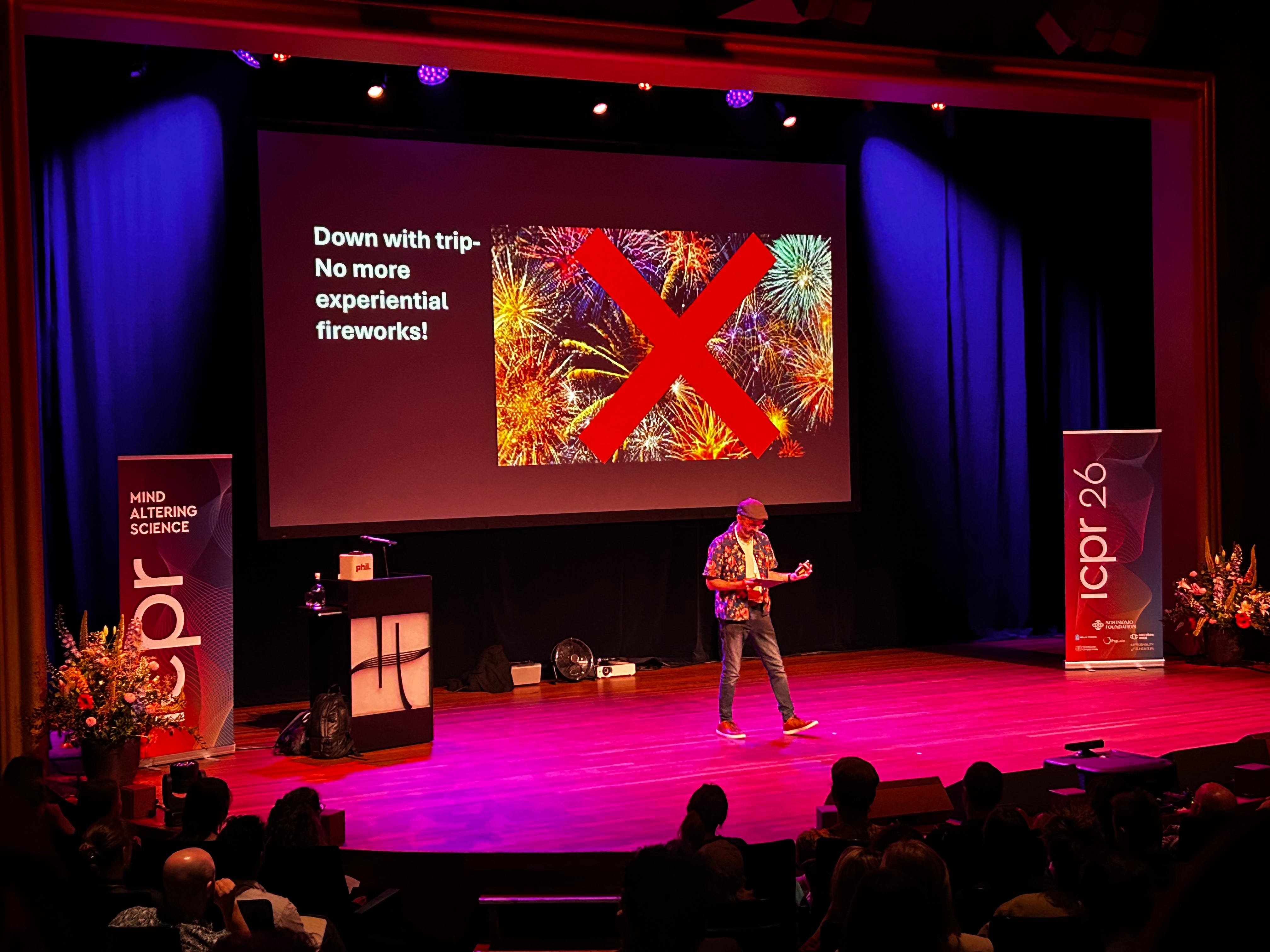
On Friday morning, I went to a symposium called “Negative clinical trials in psychedelic research: Lessons learned and future recommendations”, where three researchers talked about negative findings from studies they had conducted. A negative result means that an expected effect, relationship, or treatment outcome was not found. Scientific conferences usually highlight what went right, and negative findings are often left unpublished, or talked about with shame. As the moderator mentioned, such negative trials contain information about the limits of certain treatments, which populations may not be the best responders, and how clinical trial designs may be clashing with real-world experience. Jurriaan Strous, a Dutch psychiatrist at the University Medical Center Groningen, began the talk with a study on ketamine for suicidality that found no difference between a group given ketamine compared to a group given midazolam, a benzodiazepine. The trial ended early with 54 patients when a safety monitoring board said it would be unethical to continue since it seemed there was no effect at all. Strous pointed out that these were patients who he and his colleagues saw in the midst of crisis, and so the researchers didn’t advertise for the trial. Therefore, these patients may have had less expectations about ketamine. In fact, some had never heard of it. When they tested for blinding, the number of study participants who guessed which group they were in was the same as chance, suggesting that they may have successfully concealed who got which drug, which has proven to be particularly difficult in studies involving psychedelics. Strous showed the audience a graph of how the participants in each group rated on various scales, including the Beck Suicidal Ideation Scale. “You see no difference whatsoever,” he said. He added that he started off as a real believer back in 2014,” but after this study, “I was able to get a more neutral stance towards ketamine.”
Another panelist, psychotherapist Lea Mertens presented on the EPIsoDe study, a randomized clinical trial of psilocybin for Treatment Resistant Depression shared how, because they didn’t meet their primary endpoint of a 50% reduction of a certain depression measurement—the Hamilton Depression Rating Scale—their study was considered a negative finding. But she shared how in their long-term follow up, some participants still showed a reduction in depression. She wondered aloud how clinicians should make sense of that. Compass Pathways’s Phase 3 trials had similar results as the EPIsoDe study, but had a different predetermined end point, and so were considered positive outcomes. Mertens said it might be “a bit too simple to declare a study positive or negative based on one P-value.”
The negative findings panel was very thought-provoking. There has been research from Stanford University’s Boris Heifets and colleagues suggesting a role of expectancy on ketamine outcomes, and so these negative trials—where blinding was seemingly achieved—could help fill out that picture. But in the Q&A, some audience members pushed back, especially on the ketamine trial. One psychologist asked if there might be an anti-anxiety effect of midazolam that masked ketamine’s effects. Strous mentioned this in his talk, but said for suicidality, research on midazolam was scant. He said one explanation might be that suicidal people naturally drifted back to a less depressed baseline.

Later on Friday morning, I went to “Living with guilt: Interview on stage between Garik Rober and Peter Gasser.” Gasser is a recent president of the Swiss Medical Society for Psycholytic Therapy and Rober is a former doctor and therapist who led an illegal group psychedelic session in which two people died. Rober explained that before leading the group session, he himself took 30 to 40 micrograms of LSD; a dose slightly higher than the typical microdose of 5 to 25 micrograms. He did so because he said he “knew all of the patients and expected tensions between them,” and thought that taking LSD would “open” him up to being better equipped to manage the participants. The group first took methylone, a synthetic drug with stimulant properties, and then MDMA. When Rober left the room to measure out the MDMA powder, he said he had trouble reading the scale and accidentally gave each person 10 times the expected dose. When certain participants started openly responding with agitation and distress, he gave one man diazepam, a drug that can relieve anxiety. A few minutes later, the man turned blue; Rober administered CPR while asking his wife, who was co-leading the session with him, to call emergency responders. The man died, as did another young man in the session. Rober was sent to jail that same day. He was ultimately charged with negligent homicide, and served three years in prison. (Despite his lifetime ban on practicing medicine or therapy, I noticed on his website that Rober still offers “coaching” by donation.)
It was a harrowing story, but if the purpose of the panel was to provide cautionary lessons to other facilitators or therapists, the interview fell short in significant ways. A number of key mistakes in the narrative weren’t addressed: like, why did Rober think that LSD would make him a better leader of a group of impaired and vulnerable people? Does that kind of thinking still exist in psychedelic circles—above or underground? When Rober doubted his MDMA measurements, he considered asking for help from his wife, but ultimately didn’t because they had had a small argument that morning. This could be a warning against spouses or people with personal relationships leading together if they let their personal lives interfere, but that wasn’t commented on either. Also, the question of training wasn’t acknowledged. Rober said he was trained by Samuel Widmer, a controversial therapist who died in 2017 whose permit to use psychedelics for research was banned by the Swiss Federal Office of Public Health. Widmer started the Kirschblütengemeinschaft, or the Cherry Blossom Community. This group of adults and children has been described in European news media and testimony from former members as cult-like, and dangerous—where alleged sexual abuse took place between patients and therapists and within families, and people died of overdoses. Did training with Widmer influence Rober’s decision-making and general attitudes towards guiding others during psychedelic trips?
In the Q&A, one person asked a good question about how therapists working with psychedelics often use psychedelics themselves. The audience member asked Rober if his own drug use led him to “erroneous ideas” and “narcissism?” Rober acknowledged that his psychedelic use supported his views at the time. “What can you learn out of my case?” he said. “How important, how necessary is supervision, intervention, being in contact with colleagues, and being honest with whatever happened.” But Gasser said, “I think we have to differentiate between taking psychedelics while being in the treatment of patients or taking it outside in a special setting for your training and self exploration. I mean, here it was clear LSD does not help managing any tools,” meaning the scale. The audience laughed. The question asker raised their voice to add, “They both have risks!”
The next day, on Saturday, I sat in on a talk called “A decade of clinical Insights: real-world evidence from European ketamine clinics.” Four experts shared their experience opening clinics that offer ketamine-assisted therapy in the Czech Republic, Germany, Norway and The Netherlands. It seems like a big undertaking to open a clinic, but my takeaway from this panel was how wildly different ketamine clinics (though likely not all of them) could be in Europe compared to the United States. Off-label ketamine clinics in the United States have faced their fair share of criticism; the industry was called in one paper the “wild west.” Clinics rarely take any form of insurance, and people might receive ketamine infusions without psychotherapy, with same-day appointments, or even get intravenous ketamine injections mailed to their home. This is radically divergent from what I heard from the European panelists who all described how ketamine was embedded in rigorous therapy programs that in some cases also involved art therapy, music, and even kayaking. “I can’t imagine giving ketamine to people… to just leave people in a room,” said Rutger Engels, a professor in Developmental Psychopathology, at the Erasmus University Rotterdam and co-founder of a clinic called Senz in the Netherlands. I admit that my American brain kept thinking, This sounds expensive! But then, each expert also described how most or all of their clinics were covered by insurance, and often with state-funded healthcare. In Norway, for example, at the Axon clinic, they use an Acceptance and Commitment Therapy-based approach in combination with generic ketamine, for which the country has approved nationwide reimbursement for treatment-resistant depression. Each panelist also shared how they discern who is the best fit for ketamine-assisted therapy —it’s not a given that any person will be administered the drug.
Later on Saturday afternoon, I went to a talk called “Patient perspectives and experiences of a novel psychedelic treatment for postpartum depression.” The talk covered findings from an interesting survey of women who participated in a postpartum depression study funded by the company Reunion, using RE104, a novel compound similar to psilocybin but with a shorter trip duration. University of South Florida epidemiologist Amanda Elmore was not involved in the original study but interviewed seven participants from one trial site about what it was like. All the people she talked to who got the active higher dose experienced remission in their depression, and said they felt more present with their babies after, and that their confidence as mothers was boosted. Getting insights from participants is invaluable. For example, the women did not bring up concerns around having to stop breastfeeding during the study, though they did express wishing for more counseling and support after the trial. One woman complained about only meeting with her counselor once. In the active group some people had positive drug experiences, while others were distressed: “My brain was just splitting open… I was so angry during it…very chaotic… not a moment of it was pleasant.” Yet both kinds of experiences still could lead to good outcomes. One person in the low-dose placebo group also had similar remission levels in depression scores. But for another woman who was aware that she was in the low dose group, the trial didn’t seem to manage her disappointment well. She told Elmore, “I’m back at square one… if I didn’t have the treatment then it’s like well what now? Where do I go? What do I do?”
Looking to the future psychedelic applications, in a talk called “Can psychedelics ever be given in the clinical setting to someone who does not have capacity to give consent?” Caroline Hayes, a psychiatrist based in Newcastle-upon-Tyne, UK spoke about a 2025 case report in which a woman in a minimally conscious state was given a dose of psilocybin. “This made me feel a little bit uncomfortable,” she said. I thought about Jonathan Moens excellent National Geographic piece on this topic about a husband who grappled with giving his minimally conscious and vegetative wife psilocybin. Hayes’s main message, bolstered by the legal concepts of capacity and consent in the UK, is that the research wasn’t far enough along to justify giving minimally conscious patients psychedelics. A person wouldn’t be able to receive preparation before their experience, or integration after—which are known to be helpful. And their experiences may be quite different than we are able to grasp. In a recent case report, a woman with a significant brain injury woke up from a 20-day coma and reported that she had had a traumatic near death experience without any drugs at all; this shows it’s possible to have a challenging experience, even in different brain states. “Patients with disorders of consciousness have no way of communicating that the experience that they’re having is challenging,” she said. During the Q&A session, Hayes said her views also extended to dementia cases, in spite of anecdotal cases where people with dementia gain some function for a short time after taking psychedelics. A person commented that in the Netherlands, patients could give prior consent to euthanasia, and asked whether such consent could apply in these cases too. Again, Hayes was wary. “Your opinion might change, you know, the version of you that signed that form isn’t the version of you that is experiencing that later stage.”
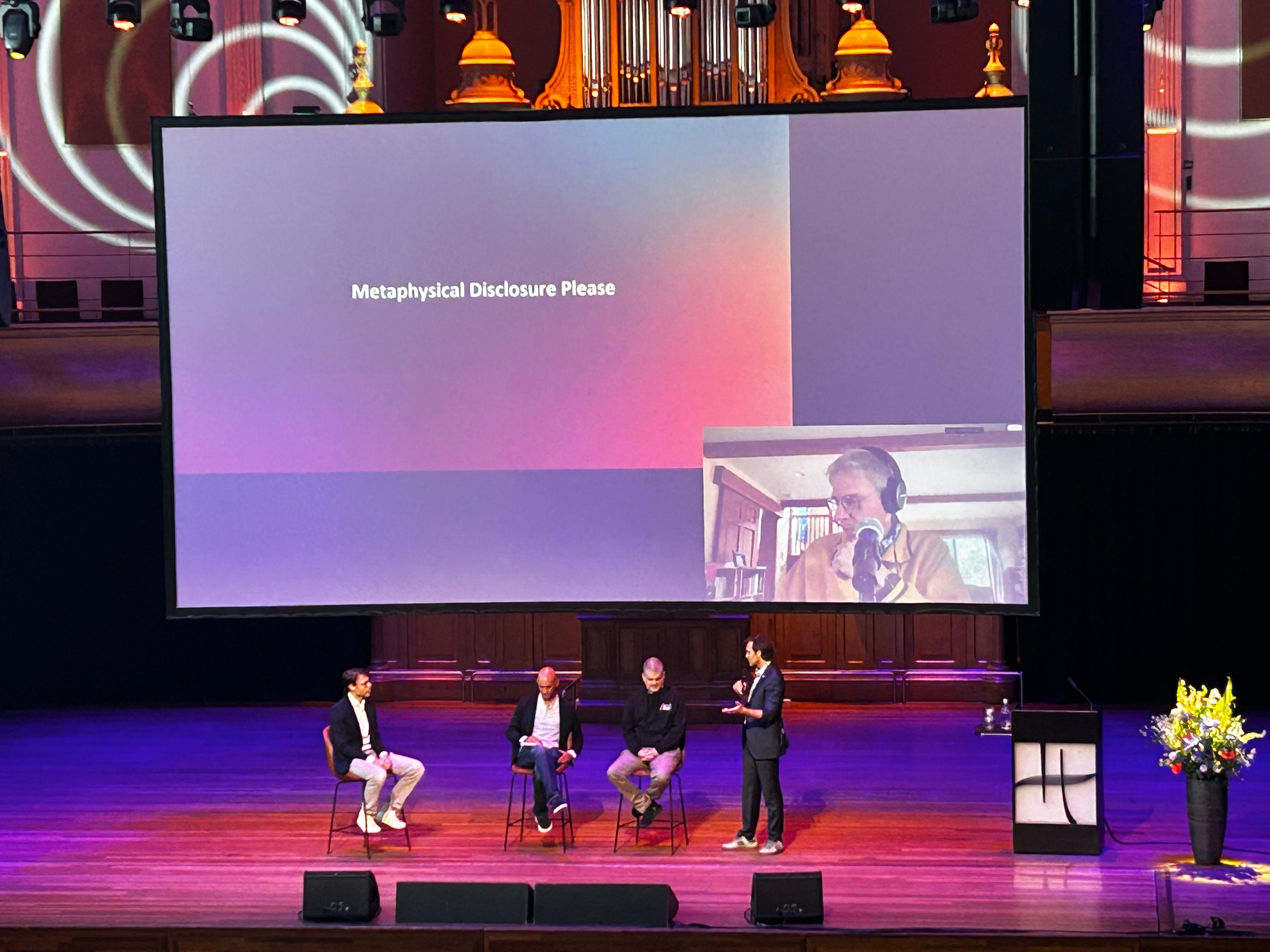
Throughout the entire conference, there was some good psychedelic fun to be had as well. Some of my favorite moments included cognitive scientist Christof Koch’s face projected on the overhead screen while calling in virtually, looming over the other panelists in the consciousness debate, demanding of neuroscientist Anil Seth: “Have you ever had the experience of becoming ‘one’?” Or University of Fribourg philosopher, Jason Day, breaking down the psychedelic experience into phenomenological categories that included, “What the f*ckness.” Drug historian and sociologist Ido Hartogsohn gave a spirited talk on non-hallucinogenic compounds, comparing them to diet soda that force us to define the value of a psychedelic experience.
A tradition of the closing session is that a random group of speakers is brought onto the stage with little notice and asked to reflect on the conference. Adana Omagua Kambeba, an Indigenous Brazilian medical doctor shared that at ICPR two years ago, there was only one Indigenous representative from Brazil (there were three in total), and this year only five. “The vast majority are scientists, researchers, and people connected to pharmaceuticals, but where are the guardians of these medicines that here are called psychedelics?”
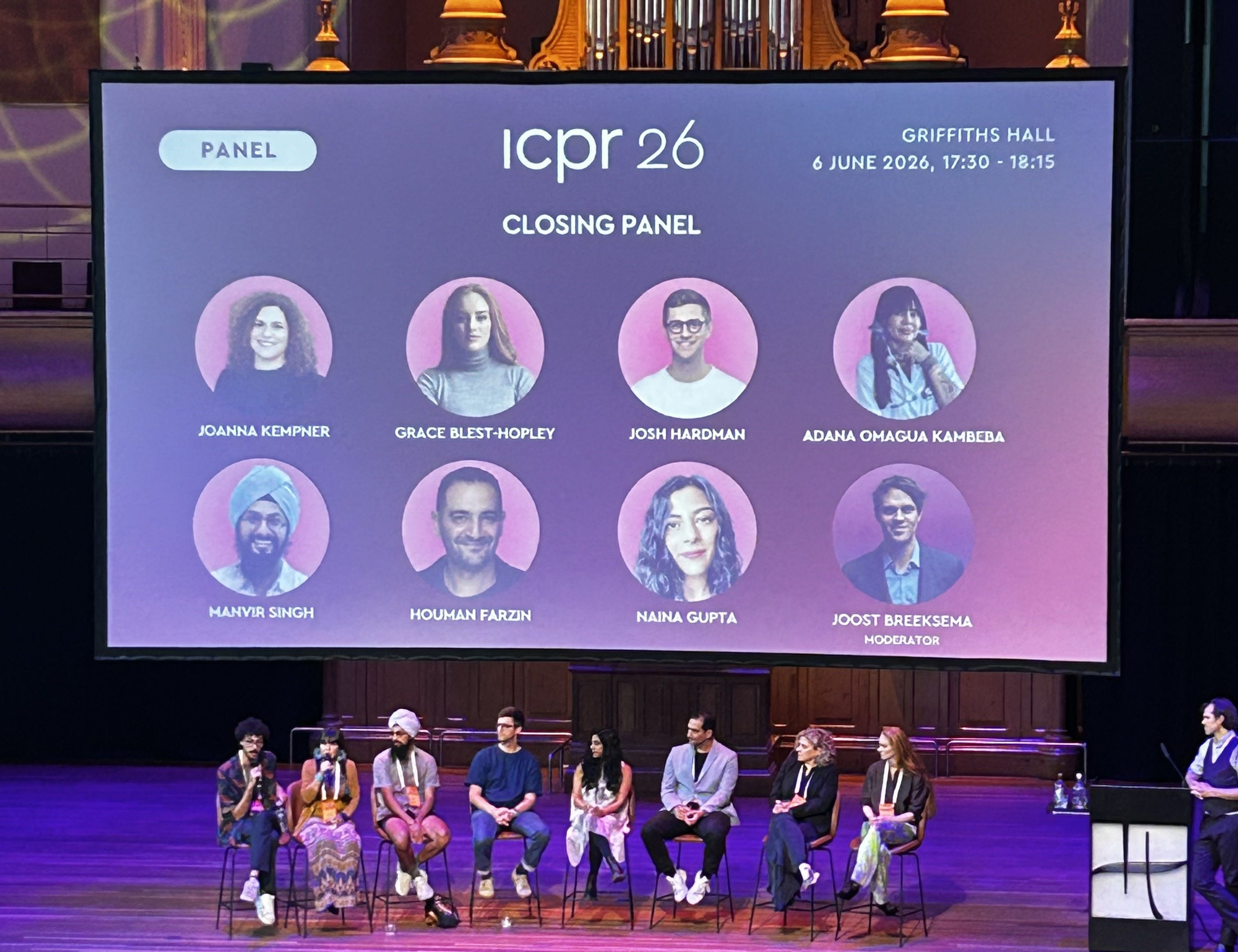
Her comments led to applause, and then the other chosen panelists shared more groups they felt were underrepresented. Grace Blest-Hopley wanted the focus on women’s health to continue, while sociologist Joanna Kempner mentioned the cluster headache community—which is sometimes ostracized because they don’t necessarily prioritize the psychedelic experience in and of itself, but are seeking relief from debilitating pain. Psychedelic Alpha’s Josh Hardman said that as medical psychedelics become more available, the need to have patient representation will increase.
There have been similar calls for more inclusivity at many psychedelic conferences, for Indigenous representation, but also other groups: a greater diversity of socioeconomic classes, people of color, or those with serious mental illnesses that are often excluded from studies. I reflected on something that anthropologist Manvir Singh said in the closing panel about how the psychedelics community is now crystallizing into a proper field. There’s much to gain from that—unified questions and definitions—but things can be lost when an interdisciplinary project becomes a “field.” It risks becoming self-referential, and the questions asked become informed by only other people in the group. “How can psychedelics continue to benefit from interdisciplinarity and new ideas flowing in, while not being subject to the limitations that come as a field develops, which can close it off from other conversations?” Singh asked.
A part of the urgency around inclusion may be a response to what Singh is talking about: that the “psychedelic field” is being defined in real time, before our eyes. There’s fear that the gates will be closed, and only the people inside its borders will be able to participate and contribute. I still think that Breeksema was onto something with his metaphor around development—psychedelics are growing up. I welcome that maturity whole-heartedly, but maybe in some instances, the community should be careful about growing up too fast.

We’ll be back in your inbox on Friday with a new issue of This Week in Psychedelics.
If you know anyone who might like the latest on psychedelics in their inbox, feel free to forward this to them, or click below.
Got tips? Email us at themicrodose@berkeley.edu