
Dreaming While Under: 5 Questions with anesthesiologist Harrison Shong-Wen Chow
Chow discusses how dreams during surgery have relieved trauma symptoms.

In the summer of 2022, a 57-year-old woman went to Stanford Health Care for breast cancer surgery, and was given anesthesia. She’d had several grueling years leading up to her diagnosis. Her 18-year old son died by suicide, and she had frequent nightmares of trying to save him from falling off a cliff or being kidnapped—and failing.
While under anesthesia, the woman had a different kind of dream. She re-experienced the joy of her son’s birth, and watched as he played with her dog that he had never gotten to meet. After the surgery was over, she tearfully thanked her anesthesiologist, Harrison Shong-Wen Chow, a clinical associate professor of anesthesiology at Stanford Medical School, for the experience. She stopped having nightmares, and months later no longer met criteria for PTSD.
Chow had seen his patients have dreams starting around 2007 when he was working in private practice. He is an expert in regional anesthesia techniques that use lighter doses of a drug, often propofol, which helps people wake up gradually, and have a faster recovery time. Patients liked that they didn’t feel groggy, and they also started telling Chow that they could remember having dreams. Some were related to traumatic incidents from their past, and after dreaming about them, they felt better. Chow and his colleagues reported such cases in 2022 and in 2024.
Since 2020, Chow has been tracking anesthesia dreams in people who come in for surgeries in collaboration with other researchers at Stanford. The Microdose talked to him about how dreaming might be reducing mental distress.
When you heard that your patients were dreaming, what were your first reactions?
At first it was a source of mirth, in the sense that both patients who were reporting dreaming and practitioners around them could all have a laugh about it. It seemed to make patients pretty happy, and that was the extent of it. There’s nothing better than a smiling patient being discharged, telling you about dreams.
During that time, a major publication came out in Anesthesiology by Kate Leslie from the Royal Melbourne Hospital. In about 350 patients under anesthesia, she reported about 22 percent of them had dreams. There were two things that were different from what I was seeing in practice. First was the dream rate. I was seeing dream rates of about 50 percent.
The second thing is that she was reporting that patients were having very mundane kinds of dreams, with no particular pattern. That was different from what we were seeing here. We were seeing patients reporting dreams that seemed related to their lives, and specifically to anxiety in their lives. It was to the point where you could—and not only myself but recovery nurses—pretty much identify what was on the patient’s mind in terms of what they were anxious about. A really typical dream was, “I was dreaming I was supposed to be at work,” or “I was dreaming that I was supposed to pick up my child.” And then, they successfully picked up the child, or had gone to work in the dream. We used to laugh about that, it was such an obvious pattern to us.
When did you first encounter someone who dreamed about something with more traumatic content, rather than everyday anxieties?
In 2009, a patient hadn’t had anesthesia with me, but a similar kind of anesthesia with a different anesthesiologist in our group. She reported that her PTSD symptoms were getting better after repeated foot surgeries. I told her we’re going to do similar anesthesia as the previous anesthesiologist did, and I’ll ask you about your dreams.
I was a little concerned, actually. This was getting a little bit over my skis as an anesthesiologist. I’m just trying to do surgical anesthesia. Her PTSD diagnosis was 30 years long, related to chronic sexual abuse as a child by her mother’s boyfriend. She suffered severe nightmares, and was afraid of being in the open; she suffered from severe agoraphobia too.
She reported a dream afterwards in which she escaped her attacker in her house, she went outside, and she was gardening. Just like before, symptoms got better—according to her. She was able to go outside and have Starbucks. She was able to open her windows again. Just like before, the symptoms eventually came back after several days. But she did get better for a couple days.
I went to some sleep conferences and anesthesia conferences to talk to people, and nobody had ever heard of this before. Everybody treated anesthesia dreams just like an observational wonder.


Do you think people get a therapeutic benefit from the anesthesia drug, or the experience of the dream?
We have a pretty educated guess on this. Before, I definitely thought it was the anesthesia medication. Over time I came to believe it was actually the dream content. There are multiple anesthetics that generate what we call this pre-emergent dream effect: propofol, dexmedetomidine, ketamine, sevoflurane, midazolam. There’s probably way more at this point.
What I’m suggesting is that in the right conditions, almost any anesthetic can generate a pre-emergent state of anesthesia that is associated with patients reporting dreaming, with a specific EEG frequency wave signature. The brain is very active. They’re not externally conscious, they won’t respond. But there’s some kind of thalamus, amygdala, and hippocampus activity—so emotional processing, fear resolution processing. And of course, the hippocampus is the storage of memories.
What is happening to the patient? We believe the patient is going through a processing of their fear based on memory. On a clinical level, they’re going through some kind of fear extinction. The memory no longer triggers them. It no longer provides a stress response. A psychiatrist would call this extinction rehearsal. In normal PTSD therapy, you slowly expose a patient over multiple sessions to their trauma, and eventually, slowly, there’s accommodation. The patient is replaying the trauma in their dream, but they’re doing it in a kind of rapid and profound fashion.
In 2020, you started to work with collaborators at Stanford. What are you doing there, and have you continued to observe dreams?
In 2020 I started, and by 2021 we were seeing lots of dreaming with Stanford patients. We’re doing a protocol very similar to what I was doing in private practice, where we are creating the conditions where patients can remain in the light anesthesia at the end of the surgery. We look at post-operative outcomes that include dream surveys, and look at whether they are aware under anesthesia. One of the biggest fears of anesthesiologists is that the anesthesia is too light. Fast forward to today, we’ve done light sedation to reduce postoperative nausea and faster recovery around 2,000 times, with 1200 reporting dreams. Thinking back to the 22%, we’re now at roughly 65%.
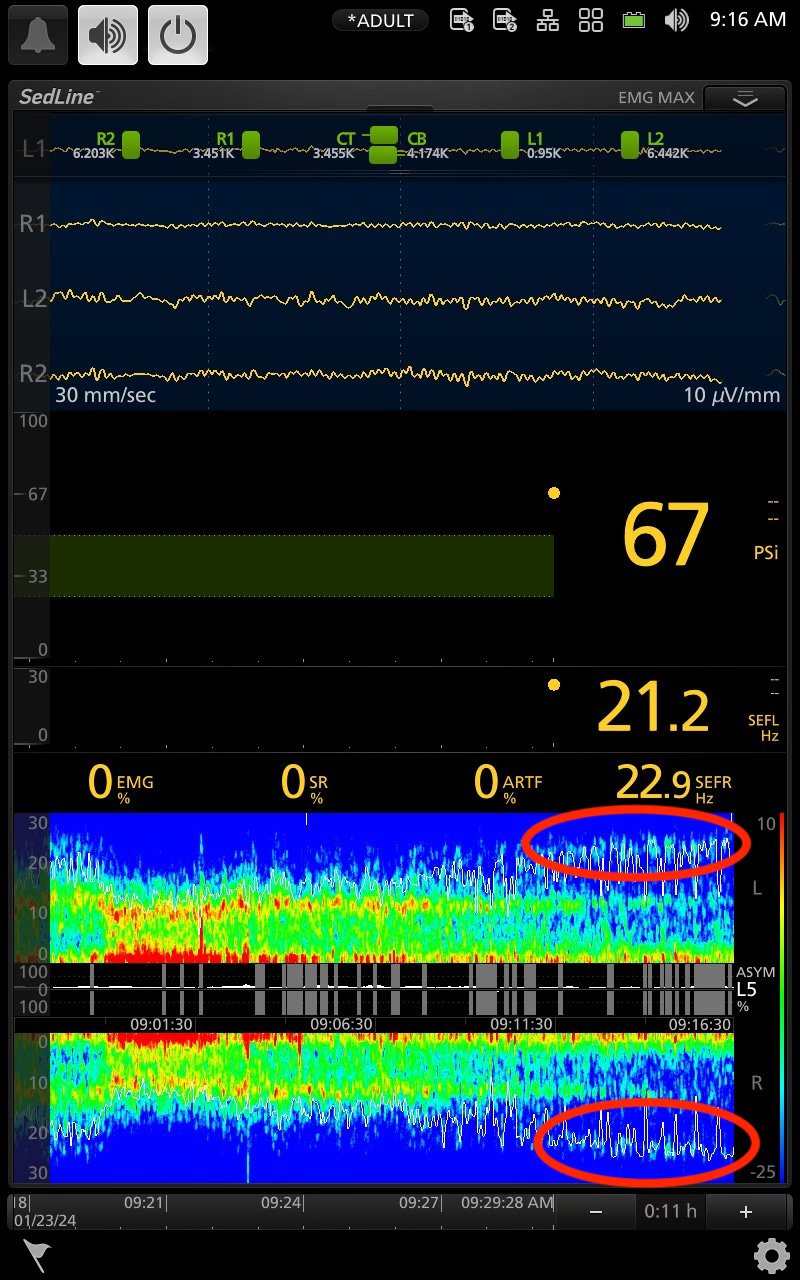
We are also using EEG, which is a pretty expensive machine that isn’t widely used in the community, especially not in surgery centers. We’re working on identifying the brain signatures for these dreams. When patients are in this pre-emergent state, we have a signature we associate with this dream consciousness.
We also now have an investigational dream emergence anesthesia lab. We’ve run through a number of volunteers, most of them psychology graduate students, who seem happy to sign up for dosing studies. We are underway with a PTSD trial using a propofol dream protocol, using EEG guidance very much like in surgery; these patients will obviously not be having surgery. They’re prospective PTSD patients with blinded controls. That’s underway and there will be around 55 patients.
Other drugs have been used for treating symptoms of PTSD, notably MDMA. Do you think anesthesia dreams are similar to a psychedelic experience?
Almost all of us who are involved don’t think this is really fitting a psychedelic picture. Psychedelics all have different effects, but in general, there’s a lot of distortion of reality. Things are bent, things are new, new images are created. The biggest difference is the psychedelics seem to create a third-person perspective, almost like a third-person shooter game. You’re coming from an above position, and seeing yourself below.
[Anesthesia dreams] are very different. This is new. They are really coming from a first-person perspective. There is some overlap, but by and large, people are having first-person experiences, and there’s no new data being created. In other words, everything is from memory. Nothing new that gets created. We really think this is some form of consciousness.
This interview has been edited and condensed for clarity and length
