
Project Mind Control: 5 Questions with historian John Lisle
Lisle discusses what recently-discovered documents reveal about the CIA’s top-secret project.


From 1953 to 1973, the CIA ran a program called MKULTRA. Its goal was to find ways to control people’s behavior against their will, or force them to tell the truth. In practice, the CIA experimented on thousands of people who didn’t know they were subjects.. Doctors were paid to try out hypnosis, extra-strong electroconvulsive therapy, or put people in drug-induced comas while playing repeated recordings of spoken phrases and noises. The program also made liberal use of a recently discovered psychoactive molecule: LSD.
CIA agents were given LSD so they could experience its effects, sometimes without their knowledge. In 1953, Gottlieb organized a retreat for CIA officials and scientists in Western Maryland, and one scientist who was dosed with LSD mysteriously died falling from a New York City hotel 10 days later. At CIA-funded safehouses in New York City and San Francisco, unsuspecting people were dosed with LSD to see “whether we could elicit more information from informants,” as Gottlieb recalled in later testimony. In San Francisco, for Operation Midnight Climax, federal agent George White set up a lavishly decorated bedroom with a two-way mirror, and hired sex workers to bring men there to surreptitiously give them the drug while he and others watched.
In the 1970s, congressional hearings aired MKULTRA’s dirty laundry, using financial records and interviews to expose what had occurred during the program. But a lot of information was still missing, said John Lisle, a historian of science at University of Texas, Austin.
Lisle wrote his doctoral dissertation on an earlier generation of scientists in the U.S. intelligence community like Stanley Lovell: a biochemist in charge of the research and development branch of the The Office of Strategic Services (OSS), the precursor to the CIA. During World War II, Lovell created deadly gadgets, forged documents, and disguises for undercover agents, as Lisle described in his first book, The Dirty Tricks Department. Lovell’s interest in truth serums led Lisle to MKULTRA.
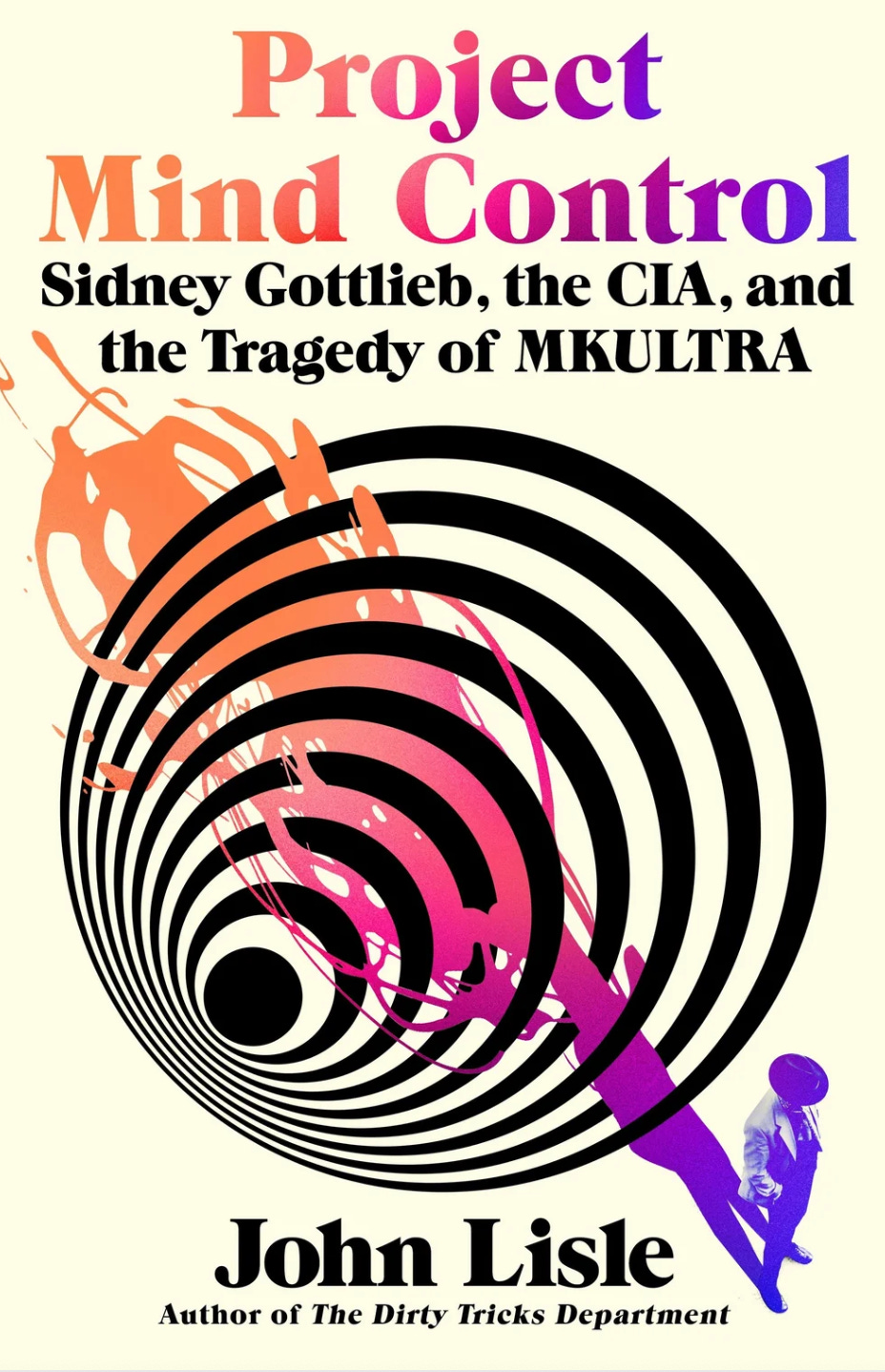
In his book from last year, Project Mind Control: Sidney Gottlieb, the CIA, and the Tragedy of MKULTRA, Lisle found never-before-seen depositions that reveal the motives and thoughts of Sidney Gottlieb, head of MKULTRA, as well as the project’s victims. (David Chase, creator of The Sopranos, is making an HBO television show based on his book.) The Microdose talked to Lisle about the new documents, where he got them, and what was uncovered about MKULTRA.
When Sidney Gottlieb retired, he threw all of his files into an incinerator. Who was he, and how was our knowledge of MKULTRA limited by what documents survived?
Sydney Gottlieb was the head of MKULTRA. He had gotten his PhD in bio-organic chemistry from Caltech, and after that, he worked various government jobs. He tried to volunteer for the Army during World War II, but he was born with club feet, and his limp prevented him from joining into service.
Gottlieb was looking for a way to pay back the debt that he felt that he owed to his country. His parents had been immigrants, and they had gotten a better life here, so he wanted to contribute something to the United States. Eventually he applied for a job at the CIA. He was a brilliant chemist, and this is right after World War II when they were looking for scientists to help discover the next weapons or tactics that could help the United States defend itself in another war. The CIA was eager to take Gottlieb on.
His first job within the CIA was working in the chemical service; he was working on methods to do secret writing. Not long afterwards, MKULTRA was created in 1953 and he was appointed to be its head. This was a program, basically, to develop methods of mind control. The fear was that communist countries, like the Soviets or the Chinese, might have developed mind control techniques. Therefore we should know those techniques and develop them on our own.
Before my book, most of the stuff that we knew about Gottlieb came from congressional committees that did investigations of past abuses of the intelligence community. Through those investigations, a lot of documents came out—the ones that survived Gottlieb’s purge.
He burned thousands of files. The head of the CIA at the time was Richard Helms. Richard Helms had been a big sponsor of MKULTRA throughout its entire existence, and in 1973 both Gottlieb and Helms were retiring. Gottlieb went to Helms and asked him, “Hey, what should we do about all these files?” Helms agreed that they should destroy them. Gottlieb took them to a record center and had them incinerated. But he forgot that he had already sent several boxes to that record center years before: the financial documents of MKULTRA. Those are the boxes that survived. It’s not the reports of the MKULTRA’s subprojects, but the financial records about who was getting paid, and an overview of what they were supposed to do. That’s how this originally came out, and that’s what we knew before my book.
What are the new depositions you found, and where did they come from?
The basis of my book is a series of depositions that mostly occurred in the 1980s. After the congressional committees, many of the victims of MKULTRA realized that they were indeed victims. Beforehand, a lot of them thought that they had received poor treatment at the hands of these doctors. They didn’t know the CIA was sponsoring the doctors to do certain experiments.
Many of these victims sued the CIA. As part of those lawsuits, the attorneys representing the victims took the depositions of several people who were involved, including Sidney Gottlieb, Richard Helms, and others. That’s the origin of these depositions; they come about as part of the lawsuits that the victims launched against the CIA.
The main case where these depositions occurred was called the Orlikow case; Velma Orlikow was a woman who was a victim of [the Canadian psychiatrist] Donald Ewan Cameron. His experiments in Montreal were sponsored by MKULTRA. It got settled out of court; it never went to trial, so these depositions wound up in the hands of the main lawyer who was representing the victims, a guy named Joseph Rauh. They just sat in his papers. When he passed away, his papers were donated to the Library of Congress.
When I was investigating MKULTRA and trying to look for new documents, I went to Rauh’s papers, because I knew he had represented the victims of MKULTRA. It turns out, in these boxes are the depositions that never got submitted to court. There were thousands of pages of Gottlieb, his right hand man, Robert Lashbrook, Richard Helms, and others being grilled about what they did.
This is great for the historian, because with history, you rarely have verbatim quotes. Most of the time, historians summarize. The great thing about this book is that I have dialogue. There’s a literal court reporter in the room recording the back and forth between attorneys and the victims, or Gottlieb and the perpetrators.
They were sworn in, but they could still lie, or tell untruths. I try, in the book, to compare the depositions of different people to say, Okay, they’re contradicting each other here. We know at least one of them has to be lying. In general, I did get the impression that Gottlieb was fairly truthful. I got the impression that Robert Lashbrook, his right hand man, was not. He really did not like talking under oath. He put up a lot of fuss about it.

What do the depositions tell us about Gottlieb’s motives, or what was going on in his head?
I think Gottlieb was honest in saying that he had joined the CIA, and was happy to go along with MKULTRA, because he thought it was in the service of national security. He really thought that this was in the interest of the country, and it was an ends-justify-the-means situation.
Gottlieb seems like he had a hard time afterwards coming to grips with the fact that he had done something so unethical. It took him several decades to reach that realization. You can see this especially when Joseph Rauh, the attorney, confronts Gottlieb about why he destroyed the files.
If you think about it, those files are classified anyway. It’s not like the CIA is going to release them to the public. Why would you destroy them? Gottlieb goes through several explanations before he reveals his main motivation. One explanation is that the CIA had so much paper, and there just wasn’t any room in the headquarters anymore. He’s just making this up, and that’s not convincing at all. Another explanation is that he was worried that the names of these people would get out somehow, and it would undermine the CIA’s credibility if it couldn’t keep secret the names of the people that it had been experimenting with. Finally, he breaks down during one of these depositions, and he says, I destroyed these files because it was embarrassing. I didn’t want people to know what we had done, and so we destroyed them.
Another thing he admits in the depositions: we didn’t really get anything out of this. We spent millions of dollars on hundreds of different researchers, and we didn’t learn anything that was actionable. We couldn’t use it in some kind of covert action type operations. He was embarrassed by it. Imagine the amount of mental and physical toll that you’ve taken on people over all these years through MKULTRA, and it amounted to basically nothing.
Another important thing that Gottlieb reveals in the files, for the first time, is that when Gottlieb was within the CIA, he was assigned to figure out a way to assassinate Patrice Lumumba, the Prime Minister of the Congo. It’s been long known that Gottlieb was involved in this, but nobody ever knew exactly how Gottlieb was doing it. They knew that he had some kind of chemical or biological agent that he wanted to slip to Lumumba. In the depositions, Gottlieb for the first time reveals what it was. It turns out to be anthrax. He was trying to slip anthrax to Lumumba in his toothpaste, or by some other means.
MKULTRA lasted such a long time, even though, as you say, it wasn’t very successful. Do the depositions indicate why it lasted so long, or how they got away with it when so much of what they did was illegal?
There were some people in the CIA, including the Inspector General, who said in his own words that this was both illegal and unethical. Why is it that no one ever tried to put a stop to it? A couple of main reasons are that the Inspector General of the CIA didn’t have much power, and could be fired on a whim. Therefore, he was incentivized to not ruffle people’s feathers so that he wouldn’t get in trouble, and he could keep his job.
Another reason Gottlieb talks about when he’s mentioning destroying the files, is that the record keeping in the CIA wasn’t that good. You could destroy files and face zero repercussions for it. There was a degree of plausible deniability that was baked into these people’s rationale. They knew if anything ever went south, they could at least destroy the files and have plausible deniability about being involved in something so sinister.
Did you include or highlight the voices of victims of MKULTRA experiments?
In the first half of the book, I explain the origins of MKULTRA, what MKULTRA was, and the details of its subprojects. I dedicated the entire second half to the fallout, how it was revealed to the public, and what happened afterwards when the victims found out that they had been victims of CIA experiments.
Many of them sued the CIA, and I spend a lot of the book talking about these lawsuits, and giving descriptions of what happened to them. One of them is Mary Morrow; I probably spend more time on her than any of the other victims. She was a victim of Donald Ewen Cameron in Canada. The ironic thing about her story is that she had been one of Cameron’s assistants at the Allen Memorial Institute, but she had a mental breakdown, and she ended up being one of the victims. She received many of the so-called treatments [like a ‘de-patterning’ treatment of a combination of electroshock and barbiturates] that she had been doling out beforehand. She realized how terrible and nefarious these treatments actually were.
I spend a lot of time telling the stories of the victims. There’s many good depictions of them that lay out their own stories in their own words, that give a lot more detail to what they went through, rather than just the perspective of someone like Sidney Gottlieb, who’s on the other side of it.
This interview has been edited and condensed for clarity and length.
