
The poster child for psychedelic mushrooms is named after a country that doesn’t use it
On the history of Psilocybe cubensis and Cuba

Psilocybe cubensis, which produces mushrooms with whitish stalks, tawny brown caps, and subtle blue bruising, is arguably the best-known and most widely used psychedelic mushroom in the world. When Dennis and Terrence McKenna published the first reliable instructions in English for growing psilocybin mushrooms in 1976 — in the form of a book, Psilocybin: Magic Mushroom Grower’s Guide, which would go on to become a counterculture classic — their instructions were tailored to growing P. cubensis specifically. Many of the best-known strains trip-seekers look for today, including Golden Teacher and B+, are cultivated from P. cubensis. The species is, according to mycologist and psilocybe researcher at Clark University Alexander Bradshaw, “the poster child of magic mushrooms.”
But when P. cubensis, or cubensis for short, first entered the canon of Western science with an official name and description, the person who found it would never have imagined that the little brown mushroom he scooped up would one day be a global sensation.
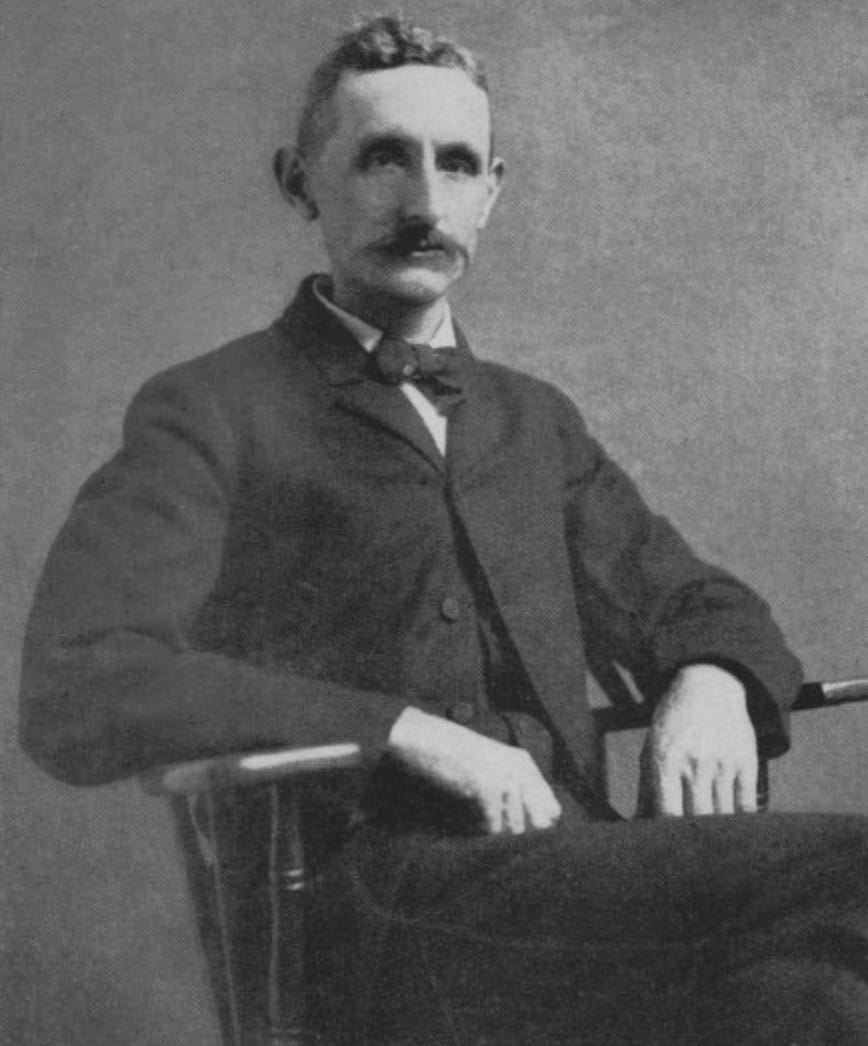
The mushroom was collected and first given a scientific Latin name in Cuba in 1906, the same year the U.S. government began occupying the island following a contested presidential election. The man who found and named it was U.S. citizen Franklin Sumner Earle, who had moved to the island nation two years prior to direct Cuba’s Agronomical Station. Earle’s interest in fungi was the “distinctive feature of his early life,” according to his colleague Carlos E. Chardón, a trailblazing Puerto Rican mycologist. But at the turn of the 20th century, fungi were poorly understood and often studied only when they showed up as a risk to human health or crop yields, so Earle did what any fungi-lover trying to make a living would do: he levied his mycological interest into a job as a plant pathologist. His career included stints working in that capacity for the U.S. Department of Agriculture, as well as serving as a biology professor at the Alabama Polytechnic Institute, and overseeing the mycological collections at the New York Botanical Garden (NYBG).
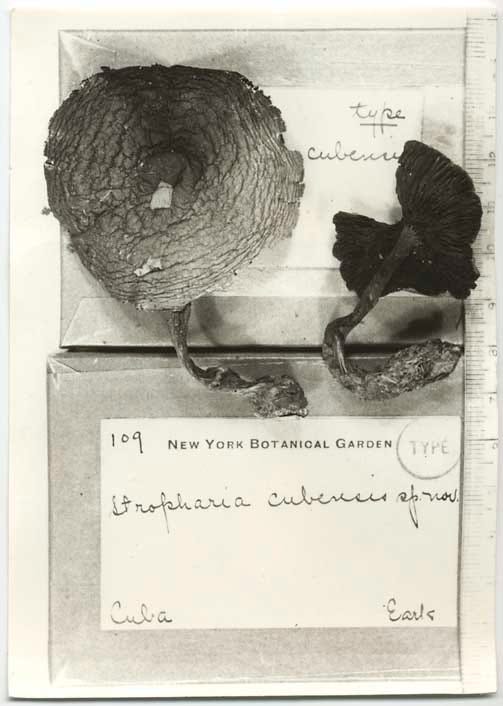
It was while at NYBG that he received the offer to begin directing the Agronomical Station in Cuba, and though he left his post in New York to begin a new life in Santiago de las Vegas, he maintained a relationship with his old colleagues. Once on the ground in his new home, he continued to send interesting letters and specimens back to the Garden in New York, where his findings were added to the ever-growing herbarium. Among them was a collection of two tawny brown mushrooms that Earle dubbed “Stropharia cubensis.” The genus Stropharia would later be swapped for Psilocybe by the mycologist Rolf Singer, but Earle’s moniker “cubensis” — named for the fact that the specimen was found in Cuba — has stuck ever since.
I found myself wondering if Earle had any idea that this mushroom was special; so special, in fact, that it’s the reason we’re still talking about him a century later. So one sunny day in April, I hopped on the train from Brooklyn and headed toward the Bronx, where Earle’s letters were filed away in the library archives at the New York Botanic Garden.
Thumbing through his hundred-year-old correspondences with colleagues, I came across staffing and interpersonal queries, and evidence of Earle’s salary (in 1904, before he took the position in Cuba, he had been making $1800 a year at the Botanic Garden, equivalent to about $67,352 in 2026 dollars; he wrote later that year asking for a raise to $2500, or the equivalent of about $93,545 today, before accepting the job in Cuba). Once in Cuba, the letters document a shift in his relationship with Cuban authorities — from “my relations with the government continue to be eminently satisfactory” in 1904, shortly after he arrived, to a proclamation that he’d lost a “long drawn out fight” with the Cuban Secretary of Agriculture by 1906. Later that year, he would resign from his post, though he stayed in Cuba and continued to work on agricultural issues.
But nowhere in his letters are there any mentions of cubensis, or any hint that Earle knew what powers it might possess.
Was it possible that these mushrooms were culturally significant, and Earle had missed that significance entirely? He was, after all, a U.S. scientist focused on pathogenic threats to sugar cane. Or was it that Cubans at the turn of the century weren’t seeking altered states of consciousness via these mushrooms? Were they even doing so now? I reached out to some Cuban mycologists to find out.
According to Lázaro Castro Hernández, a Cuban doctoral candidate in ecology in Chile, Earle’s oversight is not surprising, because Cubans themselves didn’t know about the mushroom’s psychedelic properties. Most still don’t. “Although this species is present in Cuba, the majority of the population is unaware of its potential as a psychedelic mushroom,” Hernández told me via email. “Consequently, it is not integrated into Cuban traditions or medicine.”
To Milay Cabarroi Hernández, a Cuban mycologist who worked for more than a decade at the National Botanical Garden of Cuba and at the University of Havana before moving to the University of Guadalajara in Mexico, where she now works, that resonates. “There is no strong evidence of an Indigenous Cuban mushroom tradition,” she noted. Hernández was never exposed to fungi until university, where she fell in love with them on her very first day of class. But when she told friends and family that she intended to study mushrooms, they told her she was “crazy.”
“Cuba is generally considered a mycophobic country,” she explained. “Mushrooms are not widely consumed, nor are they well known among the general population.” In college, she met a few students who experimented some with psychedelics, but most of it stayed underground and infrequently documented due to Cuba’s strict drug laws.
The Cuban government restricts not just the possession and use of psychedelics, but information about them as well. When Hernández was serving as advisor for a student investigating fungi that grow on manure, a category that includes psilocybin-containing mushrooms like P. cubensis, they decided not to publish that research because of what Hernández described as “possible legal implications.” The fear was that the report might make known the growing locations of P. cubensis when the Cuban government considered it a harmful drug. “Research involving psychedelics in Cuba is a complicated subject,” she told me.
If there is current academic interest in P. cubensis within Cuba, I couldn’t find it. When Hernández tried to facilitate interviews for this story with her mycology colleagues still in Cuba, she was told that there would be prohibitively cumbersome paperwork required for any of them if they wanted to give an interview to a foreign journalist, “especially someone from the U.S.” Even if they had been able to get the permissions required, it’s understandable they might have had other priorities: the country is facing blackouts and a deepening humanitarian crisis due to the U.S. government cutting off the oil supply and imposing an ongoing economic blockade.

So how should we make sense of the world’s most famous “magic” mushroom being named after a country that doesn’t have a deep cultural relationship with it, especially when neighboring countries like Mexico have much longer and more established traditions of psilocybin use?
One part of the answer is, of course, that a species being entered into scientific literature has very little to do with when that species first became known to humans. The people Indigenous to any given landscape have often been using local flora and funga for millennia before a scientist “discovers it,” giving it a Latin binomial name and sticking a specimen in an herbarium. Looking at the long history of use of psilocybin-containing mushrooms in nearby countries like Mexico, it would be tempting to assume that those populations were intimately familiar with P. cubensis even if Cubans weren’t, and that if Earle had happened to be stationed in Oaxaca rather than Santiago, he might have found the same mushroom, recognized its significance to local populations, and named it after Mexico rather than Cuba.
But the truth is that even in places like Oaxaca, Mexico, where P. cubensis is frequently used now, it likely wasn’t a commonly used psychedelic there at the time of Earle’s finding. Alexander Bradshaw, who has been researching psilocybe species as an evolutionary biologist, said that on his visits to Oaxaca, he was told many times that there’s not a strong historical tradition around P. cubensis the way there is with other psychedelic mushrooms. This anecdotal evidence seems to check out: the psychedelic mushrooms from which psilocybin and psilocin were first crystallized, which were brought back from Mexico by Gordon Wasson in the 1950s, when “magic” mushrooms first burst into the U.S. spotlight, were not cubensis, but the species that would come to be known, fittingly, as Psilocybe mexicana.
Bradshaw’s theory is that P. cubensis was first introduced to the Americas (likely via cattle dung, as first proposed by Mexican psilocybe expert Gastón Guzmán), perhaps after originating in Asia. Earle’s finding of the type specimen is likely from this first dispersal. But after that, Bradshaw noted, there’s a bit of a gap in the historical record — cubensis doesn’t really show up in herbarium collections after that for decades, which is odd considering that “if you’re in a cow field and they’re occurring there, they’re extremely obvious,” Bradshaw told me. If they had been widely present, “these things would have been found,” he believes.
And then “all of a sudden, post 1970s, they seemed to be everywhere,” showing up in the fungarium collections of museums all over the world. One example he pointed to is in Fiji, where museum collections specifically note that they had never had samples of P. cubensis before, but they believe the mushroom was brought into the nation by Peace Corps volunteers. Since the Peace Corps only operated in Fiji from 1969 to 1973, that seems to fit Bradshaw’s theory that cubensis’s most significant dispersal came not from cattle or ancient sacred usage in Mesoamerica, but from the much more recent “shroom boom” of the hippie era, propelled by U.S. counterculture types.
“There was definitely at least secondary or even tertiary spread via those populations,” he said. Why cubensis rather than other species of psychedelic mushrooms, like P. mexicana? “I think people latched on to [cubensis] because it was very easy to grow,” he said.
If that’s the case, then perhaps Earle’s lack of recognition that he’d found something special in cubensis at the beginning of the 20th century makes sense: not only was it not used by Cuban populations as a psychedelic, but even nearby people in neighboring countries that did use psychedelics more regularly weren’t using P. cubensis at that point. The mushroom was just biding its time, waiting for its turn in the limelight.

 | A guest post by
|